

| Age Group | Current Issue | Better Guidance |
| Infants 0–12 months | “Zero innate impulse control” sounds too absolute. | Use: “Infants are not developmentally ready to understand rules or consequences. Focus on safety, comfort, redirection, and changing the environment.” |
| Toddlers 1–3 years | “Timeouts longer than 2–3 minutes” is too rigid. | Use redirection, simple limits, choices, and brief time-outs only when needed for a clearly broken rule. |
| Preschoolers 4–5 years | “Taking away comfort items” is too broad. | Use immediate, related, short logical consequences instead of removing comfort objects. |
| School-age 6–12 years | Good foundation. | Add repair actions: apologizing, helping fix a mess, or making a plan to do better next time. |
| Teens 13+ | Missing a game may feel punitive rather than educational. | Use collaborative rules, related consequences, problem-solving, and reasonable privilege limits. Do not withhold safety, education, healthcare, or healthy support systems. |
As a parent, you probably feel like your day is a mix of beautiful moments and exhausting power struggles. One minute you are laughing together, and the next you are wondering why your toddler is drawing on the drywall or your teenager is giving you the silent treatment. If you feel overwhelmed, you are not alone.
Maintaining harmony at home requires more than just reactive rules; it takes a clear understanding of your child’s growing brain. According to landmark clinical research published in the National Institutes of Health (NIH), effective discipline is not about forcing short-term obedience through fear. Instead, it is a healthy teaching framework designed to foster long-term self-control and emotional maturity.
To take the guesswork out of your daily routine, our health experts built a comprehensive age-appropriate discipline chart to help you choose the right guidance strategy for every major stage of your child's development.
1. Shift Your Mindset From Punishment to Teaching

Many families view discipline as a system of penalties. However, pediatricians from organizations like the American Academy of Pediatrics (AAP) note that the root word of discipline is actually discipulus, which means "pupil" or "learner." When we switch our focus from punishing mistakes to teaching skills, family dynamics change dramatically.
Choosing a positive method of discipline does not mean you let boundaries slide. It means you establish clear, predictable boundaries using clear communication rather than anger. This approach builds deep emotional security and helps your child understand exactly what you expect from them.
2. Decode the Science of Why Kids Misbehave

Children rarely act out simply to push your buttons. Most challenging behaviors are clumsy attempts to communicate an unmet physical or emotional need. Before you issue a consequence, consider if your child is dealing with one of these common triggers:
- Physical Fatigue or Hunger: A toddler throwing a tantrum at 5:00 PM is often physically overwhelmed, not intentionally rebellious.
- Brain Development Gaps: Young brains lack a fully developed prefrontal cortex, which limits their impulse control.
- Overstimulation: Bright lights, loud noises, or packed schedules can easily trigger a behavioral meltdown.
- A Search for Connection: Kids will settle for negative attention if they feel they are not getting enough positive attention.
3. The Core Types of Discipline at Home

Every home operates with a unique parenting style. However, developmental psychologists generally categorize the foundational types of discipline at home into four core approaches. Recognizing where your style falls can help you make healthier adjustments.
The Authoritarian Approach
This style relies heavily on strict control, high demands, and very little open dialogue. While it might stop a behavior immediately, studies show it often increases anxiety and sneaky behavior in children over time.
The Permissive Approach
Permissive parenting offers warmth but lacks clear boundaries. Children raised in this environment often struggle with self-regulation because they never have to practice working within limits.
The Neglectful Approach
This style provides minimal guidance and very little emotional support, which frequently leads to severe behavioral and attachment issues.
The Positive and Authoritative Approach
This is the gold standard for child health. It balances clear boundaries with high emotional warmth, teaching children how to problem-solve while keeping their self-esteem intact.
4. Avoid the Traps of Ineffective Discipline Methods

When a child pushes boundaries, it is natural for your stress levels to spike. However, falling back on harsh physical responses or verbal shouting can backfire. Public health data collected by UNICEF shows that aggressive discipline methods damage the trust between a parent and child without teaching the right behavior. Shouting or using physical force creates a stress response in a child's brain that actively blocks their ability to learn.
5. Discover Your Master Age-Appropriate Discipline Chart

To keep your expectations realistic, you must match your parenting strategy with your child's developmental age. The handy table below outlines the most effective, health-focused options for every major age bracket.
The Complete Age-Appropriate Discipline Chart
| Age Group | Key Behavioral Milestone | Primary Method of Discipline | What to Avoid |
| Infants (0–12 Months) | Exploring environments, zero innate impulse control. | Redirection & Environment Modification: Move the child or safety-proof the object. | Verbal lectures, timeout, or any form of punishment. |
| Toddlers (1–3 Years) | Big emotions, testing boundaries, limited language skills. | Redirection & Natural Consequences: Keep words brief, name the emotion, and use short diversions. | Long explanations or timeouts longer than 2 to 3 minutes. |
| Preschoolers (4–5 Years) | Developing empathy, understands basic cause-and-effect. | Logical Consequences & Positive Reinforcement: Use a consistent routine and praise good habits. | Inconsistent rules or taking away comfort items. |
| School-Age (6–12 Years) | Growing independence, strong peer awareness. | Collaborative Problem-Solving: Set clear expectations and withdraw privileges when necessary. | Public humiliation or overly long restrictions. |
| Teens (13+ Years) | Identity formation, abstract thinking abilities. | Natural Consequences & Open Negotiation: Let them experience life's natural results; negotiate boundaries. | Authoritarian control or invading healthy privacy boundaries. |
6. Smart Strategies for Toddlers (Ages 1 to 3)

Toddlers are little scientists testing how the world works. When they throw a toy, they are looking to see what happens next. Because their language skills are still developing, a physical form of discipline like gentle redirection is your best tool.
If your toddler hits a playmate, calmly catch their hand, look them in the eye, and say, "Hitting hurts. We use gentle hands." Then, guide them toward a different toy. Keep your phrases short, sweet, and direct.
7. Positive Tools for Preschoolers (Ages 4 to 5)

By age four, children can easily understand simple cause-and-effect relationships. This is the ideal window to introduce logical consequences that match their actions.
If your preschooler refuses to pick up their blocks, a logical consequence is putting those blocks away in a closet for the rest of the day. This teaches them a direct lesson: if you do not care for your toys, you cannot play with them.
8. Collaborative Rules for School-Age Kids (Ages 6 to 12)
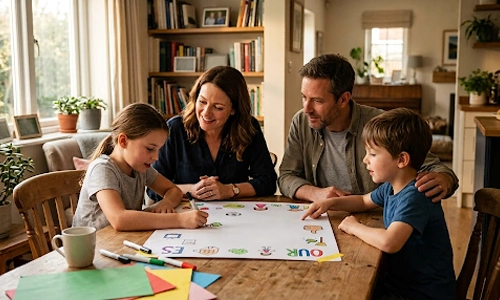
School-age kids have a well-developed sense of fairness. Instead of simply handing down rules from above, invite them into the conversation. Sitting down together to establish house rules gives them a sense of ownership over their daily choices.
For example, you might agree together that all homework must be completed before screens turn on. If they break the rule, the consequence is already clear, fair, and agreed upon in advance.
9. Navigating Independence With Teenagers (Ages 13 and Up)

With teenagers, your role shifts from a manager to a consultant. Focus less on enforcing rigid age-appropriate punishments and more on letting real-world natural consequences do the teaching.
If your teen forgets to put their sports uniform in the laundry bin, avoid rushing to clean it for them. Letting them miss a game or sit out a practice teaches them the value of personal responsibility far better than an angry lecture ever could.
10. The Power of Daily Positive Reinforcement

The most effective way to eliminate challenging behavior is to focus heavily on the moments your child gets it right. Experts call this strategy "catching your child being good."
Instead of only speaking up when your kids fight, offer specific praise when they share or play quietly. Saying, "I love how patiently you waited for your turn with that puzzle," reinforces that behavior and makes them want to repeat it.
11. Keep Your Boundaries Consistent

Inconsistency is the fastest way to undermine your household rules. If you ignore a behavior on Monday because you are tired, but hand down a harsh penalty for that exact same behavior on Tuesday, your child will end up confused and anxious. Work closely with your co-parent or caregivers to ensure everyone uses the same discipline methods, helping your child feel secure and understand expectations.
Frequently Asked Questions (FAQs)
What are the main types of discipline at home?
The four primary styles are authoritarian (strict), permissive (lax), neglectful (uninvolved), and authoritative (positive). Health experts strongly recommend positive discipline because it pairs firm boundaries with emotional support.
How do I choose the best method of discipline?
Match your approach to your child's developmental milestones. Use gentle physical redirection for toddlers, logical consequences for preschoolers, and collaborative problem-solving for school-aged kids.
What is the difference between punishment and discipline?
Punishment relies on fear or penalties to stop bad behavior in the short term. Healthy discipline acts as a form of discipline that teaches children self-control and better decision-making for the future.
Are traditional age-appropriate punishments effective?
Traditional age-appropriate punishments, like timeouts, only stop behavior temporarily. For long-term cooperation, you must pair consequences with positive instruction on what to do next time.
Why is appropriate discipline by age important?
Tailoring your discipline methods ensures your expectations match your child's brain development. Using age-appropriate discipline reduces parental frustration and protects your child's emotional well-being.
Be Patient with the Journey
Guiding a child is a long-term journey, not a short-term race. When you use an age-appropriate discipline chart to guide your daily decisions, you give your child the essential tools they need to navigate the world with confidence, resilience, and emotional intelligence. Take a deep breath, stay consistent, and focus on building a healthy connection.