

Color Blindness at a Glance
| People affected worldwide | ~300 million |
| Affects men | 1 in 12 (approx. 8%) |
| Affects women | 1 in 200 (approx. 0.5%) |
| Most common type | Red-green color blindness |
| Rarest type | Achromatopsia (complete color blindness) — ~1 in 30,000 |
| Inherited or acquired? | Mostly inherited; can be acquired |
| Is there a cure? | No cure for inherited CVD; aids and therapies available |
When most people hear the term color blind, they picture a world stripped of all color — a grey, monochromatic existence. In reality, true total color blindness is extraordinarily rare. For the vast majority of the 300 million people worldwide living with color vision deficiency (CVD), the world is still full of color — it just looks different to them than it does for most others.
Whether you have recently been told you are color blind, suspect a child may have a color vision issue, or are simply curious about how this condition works, this comprehensive guide covers everything you need to know — from the science of how we see color to the real-world challenges, career implications, testing methods, and the latest management options available today.
Understanding Normal Color Vision

To understand color blindness, it helps to first understand how healthy color vision works.
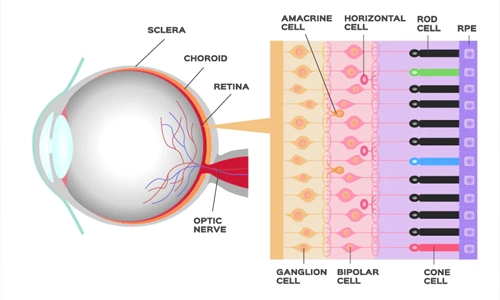
The human eye contains two types of photoreceptor cells in the retina: rods and cones. Rods handle low-light and peripheral vision. Cones are responsible for color perception and are concentrated in the central part of the retina called the macula.
Most people have three types of cone cells, each sensitive to a different wavelength of light:
- L-cones (Long wavelength): Sensitive to red light
- M-cones (Medium wavelength): Sensitive to green light
- S-cones (Short wavelength): Sensitive to blue light
The brain interprets signals from these three cone types in combination to produce the full spectrum of color — from the deepest violet to the brightest red. When any one of these cone types is absent, dysfunctional, or contains an altered light-sensitive pigment, the result is color vision deficiency — what we commonly call being color blind.
What Does It Mean to Be Color Blind?

Being color blind does not mean seeing only in black and white. Only a tiny fraction of people — those with a rare condition called achromatopsia — experience the world without any color perception at all. For everyone else, color blindness means difficulty distinguishing between certain colors, or perceiving them differently from how most people see them.
CVD exists on a spectrum, ranging from mild anomalies that a person may never even notice, through to severe forms that make everyday tasks — like choosing matching clothing, interpreting color-coded charts, or reading traffic lights — genuinely challenging.
Key Terminology
- color Blind / Color Blind: The common everyday term. Used interchangeably with color vision deficiency.
- color Vision Deficiency (CVD): The medically preferred term. More accurate, as it describes a spectrum of impairment.
- color Blind Vision: How the world appears to someone with CVD — colors appear muted, shifted, or confused with other shades.
- Trichromacy: Normal three-cone color vision.
- Anomalous Trichromacy: Having all three cones, but one functions abnormally.
- Dichromacy: Having only two functional cone types — a more severe form of CVD.
- Monochromacy: Having only one or no functional cone types — true color blindness.
Types of Color Blindness

There are several distinct types of color vision deficiency, classified by which cone cells are affected and the degree of impairment.
1. Red-Green Color Blindness (Most Common)

This is by far the most prevalent category, affecting approximately 8% of men and 0.5% of women of Northern European descent. It comes in four subtypes:
| Subtype | Cone Affected | What It Means | Severity |
| Protanopia | L-cone (red) — absent | Cannot distinguish red from green; reds appear very dark or black | Severe |
| Protanomaly | L-cone — altered pigment | Reds appear shifted toward green; reduced red sensitivity | Mild–Moderate |
| Deuteranopia | M-cone (green) — absent | Cannot distinguish green from red | Severe |
| Deuteranomaly | M-cone — altered pigment | Greens appear more red-like; most common single subtype worldwide | Mild–Moderate |
2. Blue-Yellow Color Blindness (Less Common)

This type is less common than red-green CVD and affects men and women equally, as it is not X-linked. It also has two subtypes:
| Subtype | Cone Affected | What It Means | Severity |
| Tritanopia | S-cone (blue) — absent | Blues and greens appear similar; yellows and reds confused | Severe |
| Tritanomaly | S-cone — altered pigment | Blue-yellow discrimination is reduced but not absent | Mild–Moderate |
3. Complete Color Blindness (Achromatopsia)

Achromatopsia is the rarest and most severe form of color vision deficiency. People with this condition have no functional cone cells at all, meaning they perceive the world entirely in shades of grey, white, and black. It affects approximately 1 in 30,000 people globally and is often accompanied by:
- Extreme sensitivity to bright light (photophobia)
- Nystagmus (involuntary rapid eye movements)
- Significantly reduced visual acuity
Blue cone monochromacy is a closely related condition where only one cone type (blue/S-cones) functions — also extremely rare.
| Type | Prevalence (Men) | Prevalence (Women) | X-Linked? |
| Red-Green CVD (all subtypes) | ~8% (1 in 12) | ~0.5% (1 in 200) | Yes |
| Deuteranomaly (most common) | ~5% | ~0.35% | Yes |
| Protanomaly | ~1% | <0.1% | Yes |
| Deuteranopia | ~1% | <0.1% | Yes |
| Protanopia | ~1% | <0.1% | Yes |
| Blue-Yellow CVD (Tritan) | <0.01% | <0.01% | No |
| Achromatopsia | ~0.003% | ~0.003% | No (autosomal) |
What Causes Color Blindness?
Inherited Color Blindness
The majority of color blindness cases are genetic in origin. The genes responsible for red and green cone pigments are located on the X chromosome, which explains why red-green color blindness is far more common in males than females.
Males have one X and one Y chromosome (XY). If their single X chromosome carries the defective gene, they will be color blind — there is no second X chromosome to compensate. Females have two X chromosomes (XX). They would need both X chromosomes to carry the defective gene to be color blind themselves, making it far less likely. A female carrying one defective gene is a carrier and can pass it on to her children without being color blind herself.
Inheritance Pattern Example
A carrier mother (X͜X) and a normal-vision father (XY) have a 50% chance of having a color blind son and a 50% chance of having a carrier daughter. color blind fathers always pass the X-linked gene to all daughters (making them carriers) but never to sons.
Acquired Color Blindness
Not all color vision deficiency is present from birth. Acquired CVD can develop at any age and affects men and women equally. Common causes include:
- Eye diseases: Glaucoma, macular degeneration, diabetic retinopathy, and cataracts can all damage cone cells or the optic nerve.
- Neurological conditions: Multiple sclerosis, Parkinson's disease, and Alzheimer's disease may impair the brain's color processing pathways.
- Medications: Certain drugs including hydroxychloroquine, ethambutol, digoxin, and some chemotherapy agents can affect color vision.
- Toxic exposure: Chronic exposure to solvents, carbon disulfide, fertilizers, or heavy metals (lead, mercury) can impair color vision.
- Ageing: The lens of the eye yellows with age, subtly affecting color perception — particularly in the blue-yellow range.
- Physical injury: Direct trauma to the eye or the brain's visual processing areas can cause acquired CVD.
| Feature | Inherited CVD | Acquired CVD |
| Onset | Present from birth | Develops during lifetime |
| Sex distribution | Much more common in males | Affects males and females equally |
| Eyes affected | Usually both eyes equally | May affect one eye more than the other |
| Progression | Stable throughout life | Can worsen over time |
| Reversibility | No | Sometimes, if underlying cause is treated |
| Most common type | Red-green | Red-green or blue-yellow |
Signs and Symptoms of Color Blindness

Many people with mild color vision deficiency live for years — or even their entire lives — without realising they see colors differently. The condition is often only discovered incidentally, during a routine eye examination or a formal color vision screening.
Common Signs to Watch For
- Difficulty distinguishing between red and green, or between blue and yellow
- Seeing certain colors as much duller or more washed-out than others
- Trouble reading color-coded information — maps, charts, graphs, timetables
- Difficulty telling whether meat is cooked by its color
- Confusing colors that appear similar — brown and orange, purple and blue, red and brown
- Relying on position (rather than color) to interpret traffic lights
- Choosing mismatched clothing without realising
- In children: struggling with color-based learning materials, art activities, or science experiments
Color Blind Vision: What the World Actually Looks Like
The experience of color blind vision varies significantly by type and severity. Here is a practical description of how different types of CVD affect everyday color perception:
| CVD Type | Typical color Blind Vision | Commonly Confused Pairs |
| Deuteranomaly (most common) | Greens shift toward red; reduced sensitivity across the red-green axis | Red/green, orange/brown, pink/grey |
| Protanopia | Reds appear very dark or black; cannot see red at all | Red/black, red/green, orange/yellow |
| Deuteranopia | Red and green are indistinguishable — appear as similar brownish-yellow | Red/green, brown/orange, purple/blue |
| Tritanopia | Blues and greens appear similar; yellow-pink confusion | Blue/green, yellow/violet, red/pink |
| Achromatopsia | Everything in shades of grey, white, and black | All colors appear as shades of grey |
How Is Color Blindness Diagnosed? Tests Explained
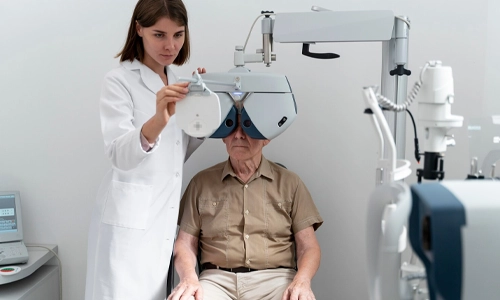
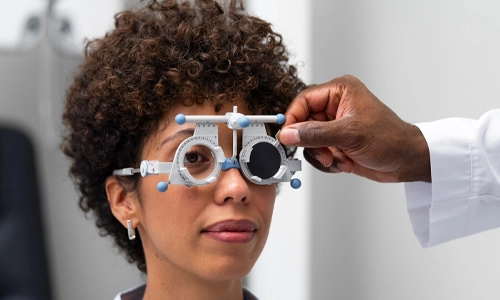
Color blindness is diagnosed through color vision tests, most often performed by an optometrist or ophthalmologist. Several established tests exist, each with its own strengths.
The Ishihara Plate Test
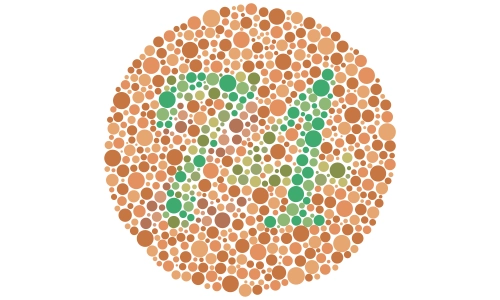
Developed in 1917 by Dr Shinobu Ishihara, this remains the most widely used screening test for red-green color blindness worldwide. It consists of 38 circular plates filled with colored dots arranged to form numbers or patterns. People with normal vision can see the numbers; those with red-green CVD cannot, or see a different number. It is fast, simple, and reliable for detecting red-green deficiency, though it does not diagnose blue-yellow CVD.
The Farnsworth-Munsell 100 Hue Test
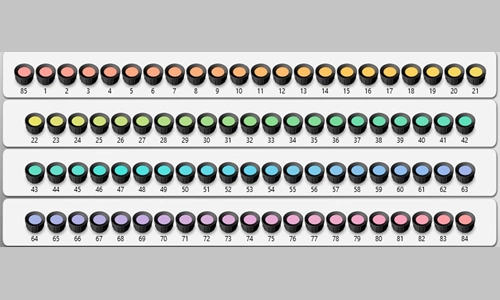
This more detailed test requires the person to arrange 85–100 colored discs in order of their hue around a complete color circle. It is highly sensitive and can detect subtle degrees of color vision impairment across all color axes. It is used in professional and occupational settings where precise color vision assessment is required.
The Farnsworth Lantern Test (FALANT)
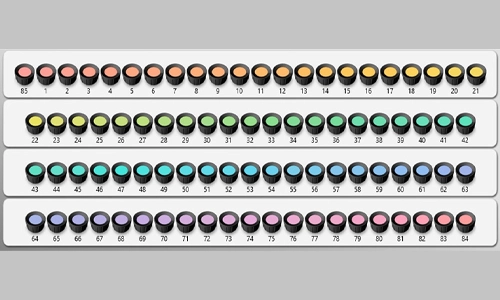
Used primarily for occupational screening — particularly in military and maritime contexts — this test assesses the ability to identify red, green, and white signal lights. It is more permissive than the Ishihara and allows many people with mild CVD to pass.
The Anomaloscope

Considered the gold standard for diagnosing the type and severity of color blindness, the anomaloscope requires a person to match two colors by adjusting their mixture and brightness. It can precisely categorise protan, deutan, and tritan defects. It is mainly used in research and specialist clinical settings.
EnChroma Cone Isolation Test
A newer digital test developed by EnChroma that assesses the sensitivity of each of the three cone types individually. Unlike the Ishihara, it can be taken while wearing EnChroma correction glasses to compare results before and after.
When Should a Color Vision Test Be Done?

- All children before starting school — particularly boys, given the 1 in 12 prevalence in males
- Before pursuing careers with strict color vision requirements (aviation, armed forces, electrical trades, certain medical roles)
- If you notice difficulty identifying colors in everyday life
- Following any eye injury, as part of the assessment
- If taking medications known to affect color vision
- As part of a routine comprehensive eye examination — at least every two years
Living with Color Blindness: Real-World Challenges
While color blindness is not a disability in the traditional sense — it does not impair reading, movement, or most cognitive functions — it creates genuine everyday challenges that are often invisible to those without the condition.
At Home
- Food preparation: Difficulty telling if meat is cooked through by its color; unable to distinguish ripe from unripe fruit (e.g., green vs yellow bananas, red vs green tomatoes).
- Clothing: Choosing mismatched outfits — navy and black, green and grey, red and brown — is a common daily frustration.
- Sunburn: Many people with red-green CVD cannot see skin redness and may not notice they are burning.
- Home and garden: Identifying plant health by leaf color, or distinguishing ripe fruit on trees, can be difficult.
At School
Children with undiagnosed color blindness frequently struggle in school without anyone understanding why. color is used extensively in educational materials — science diagrams, geography maps, maths charts, art activities. A study of color blind schoolchildren found significant disadvantage in accessing color-coded learning materials, with many children labelled as inattentive or slow when the real issue was simply an undiagnosed visual difference.
In the Workplace
Research data from a study of 102 people with color vision deficiency found that nearly 90% of those with dichromacy (severe CVD) reported difficulties with color-related tasks at work. Almost half reported specific difficulties in their current jobs.
- Electricians and engineers: Difficulty matching color-coded wires, circuit diagrams, or safety indicators.
- Healthcare professionals: Challenges reading test strip results, identifying tissue color during procedures, or interpreting color-coded patient data.
- Graphic designers and digital professionals: Significant challenges with color accuracy in design work.
- Scientists and researchers: Difficulty interpreting color-based data in graphs, staining protocols, or chromatography.
- Chefs and food professionals: Inability to assess food color for doneness, freshness, or presentation quality.
Driving and Traffic

The most commonly cited concern around color blindness and safety is traffic light recognition. In practice, most color blind drivers manage safely by using the position of lights rather than their color — red is always at the top, green at the bottom. Research suggests that traffic lights are generally not a major safety issue for most people with mild to moderate CVD.
However, some jurisdictions impose restrictions. China and Russia currently ban all color blind individuals from obtaining a driver's licence. India restricts only those with severe CVD. The UK, US, and most of Europe permit color blind drivers with no additional restrictions for private vehicles, though commercial and professional driving licences may require further testing.
Color Blindness and Career Choices

This is one of the most practically significant aspects of color vision deficiency. Certain careers have strict color vision requirements for safety reasons, and failing a color vision test during the application process can be a serious setback — particularly if the condition has never been previously diagnosed.
| Career Field | color Vision Requirement | Notes |
| Commercial pilot | Strict — must pass specific color vision tests | FAA/CAA standards; certain mild CVD may qualify with restrictions |
| Armed forces / military | Varies by branch and role | Many combat and specialist roles require normal color vision |
| Air traffic controller | Strict requirement | color-coded radar and signal systems |
| Train / rail driver | Usually restricted | color signal systems across most rail networks |
| Police / fire services | Varies by country and force | Certain roles require normal color vision |
| Electrician | Important for wire color-coding | Not prohibited, but color-coded wiring presents practical challenges |
| Medical / surgical roles | Some restriction in specialist areas | Most general medical practice is accessible |
| Graphic design / color grading | Practical limitation | Not prohibited; specialist aids available |
| Teaching / education | No restriction | Awareness helps adapt teaching materials |
| IT / software development | No restriction | color accessibility awareness recommended |
The 1875 Lagerlunda rail crash in Sweden — attributed in part to a color blind train driver misinterpreting colored signals — led to the first formal color vision requirements for railway workers, a policy that spread globally and established the precedent for occupational color vision testing that exists today.
Management and Treatment Options
There is currently no cure for inherited color blindness. However, several management tools and emerging therapies can meaningfully improve the experience of living with CVD.
Color Blind Glasses and Tinted Lenses

Specially designed tinted lenses — most notably EnChroma glasses — work by selectively filtering wavelengths of light at the point where the red and green sensitivity curves overlap. This increases the contrast between red and green signals reaching the eye, helping the brain better differentiate them.
Clinical evidence is mixed. A 2020 clinical study found that EnChroma lenses significantly reduced error scores on the Ishihara test in people with deuteranomaly, and a 2024 study found significant improvements in color matching and color appearance along the red-green axis. However, a 2022 meta-analysis concluded that the evidence for clinically significant improvement in subjective color perception remained limited. The majority of users report a subjective improvement in the vibrancy and distinguishability of colors, even if they cannot pass formal clinical tests while wearing the glasses.
Important note: Tinted lenses cannot restore normal color vision, are not permitted during clinical or occupational color vision tests, and do not work equally well for all types of CVD. They are most effective for red-green anomalous trichromats (mild to moderate CVD).
Color Blind Simulation and Accessibility Tools

- Digital accessibility filters: Operating systems (including Windows and macOS) offer built-in color filter settings that adjust screen colors for color blind users.
- Browser extensions and apps: Tools like Coblis (online) and Color Oracle simulate how images appear to color blind people, useful for designers and educators.
- color identifier apps: Smartphone apps such as Colorblind Pal and Color Blind Pal use the phone's camera to identify and name colors in real time.
- color-blind-friendly design: Growing awareness in digital design, data visualisation, and print media of the importance of designing with color blind users in mind — using patterns, labels, and contrasting shapes in addition to color.
Gene Therapy: The Future of Treatment
The most exciting frontier in color blindness research is gene therapy. Studies have demonstrated that it is possible to introduce functional cone opsin genes into the retina of adult animals and restore color vision. Research is now advancing toward human clinical trials for conditions such as achromatopsia, where the need is most acute.
The National Eye Institute (NIH) has identified gene therapy approaches as among the most promising pathways for future treatment of severe color vision deficiency. While a practical gene therapy cure for common red-green CVD may be decades away, the science is progressing.
For Acquired Color Blindness

Unlike inherited CVD, acquired color blindness may be partially or fully reversible if the underlying cause is identified and treated. Managing conditions like glaucoma, controlling blood sugar in diabetic patients, or withdrawing offending medications may stabilise or improve color vision. This makes early diagnosis and regular eye monitoring particularly important.
Common Myths About Color Blindness — Debunked

| The Myth | The Truth |
| color blind people only see black and white | Less than 1% of people with CVD have true achromatopsia. The vast majority see color — just differently. |
| Only men can be color blind | Women can be color blind too. They are far less commonly affected (1 in 200 vs 1 in 12), but not immune. |
| color blind people can't drive | In most countries, color blind people can legally drive safely. Position, not color, is the key cue for traffic lights. |
| color blindness is a minor inconvenience | For those with severe dichromacy, it affects career choice, education, safety, and daily life substantially. |
| You can become color blind from staring at screens | There is no evidence that screens cause color blindness. Acquired CVD has specific medical causes. |
| color blind glasses cure color blindness | They can improve color discrimination for some users, but are not a cure and cannot restore normal color vision. |
| All color blind people see the same way | There are multiple types and severities of CVD — the experience varies enormously between individuals. |
Famous People Who Are Color Blind

color blindness has not prevented many remarkable individuals from achieving extraordinary things:
- Mark Zuckerberg — Founder of Facebook/Meta, who reportedly chose blue as his platform's signature color because it is the shade he can most clearly distinguish.
- John Dalton — The pioneering chemist who first scientifically described color blindness in 1798 based on his own experience. The condition was briefly called Daltonism in his honour.
- Keanu Reeves — Actor and known color blind individual.
- Eddie Redmayne — Oscar-winning actor who has spoken publicly about being color blind.
- Christopher Nolan — The acclaimed filmmaker is reportedly color blind, which many film scholars find fascinating given his meticulous visual storytelling.
- Prince William — The Prince of Wales is reportedly color blind.
Their experiences illustrate that color blindness, while presenting real challenges, does not define or limit human potential.
How to Support Someone Who Is Color Blind
Whether a family member, colleague, student, or friend is color blind, there are practical ways to make their environment more accessible:
- Label colors on clothing, medication, or food items when it could cause confusion.
- In digital content and presentations, use patterns, shapes, and text labels — not color alone — to convey information.
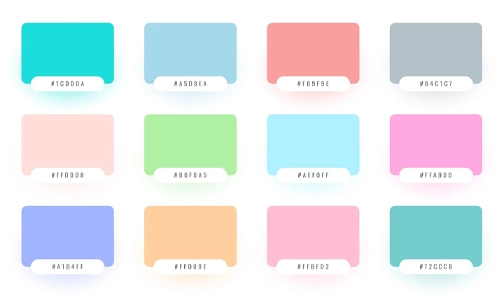
- Choose color-blind-friendly palettes in charts and graphics (blue-orange rather than red-green are far more distinguishable for most CVD types).
- Educators: use materials that do not rely exclusively on color for meaning. When color is used, pair it with text labels or patterns.
- Employers: proactively assess workstations and equipment for color-dependent requirements and provide appropriate accommodations.
- Never assume — ask. People with color blindness often develop personalised strategies and may not need as much help as you assume.
Frequently Asked Questions
Q1: Can color blindness develop later in life?
Yes. While most color blindness is inherited and present from birth, acquired color vision deficiency can develop at any age due to eye diseases (such as glaucoma or macular degeneration), systemic conditions like diabetes, certain medications, toxic exposures, or physical injury to the eye or brain. Unlike inherited CVD, acquired forms may sometimes improve if the underlying cause is addressed.
Q2: Can color blind people see any colors at all?
Yes, in the vast majority of cases. Only people with achromatopsia — a rare condition affecting roughly 1 in 30,000 people — see the world entirely in grey tones. Everyone else with color vision deficiency perceives color, just with reduced ability to distinguish certain shades, particularly within the red-green or blue-yellow spectrums.
Q3: Is color blindness hereditary?
The most common forms — red-green color blindness — are genetic and inherited through an X-linked recessive pattern. This means the gene is carried on the X chromosome, which is why the condition is approximately 16 times more common in males than females. Tritan (blue-yellow) CVD and achromatopsia follow different inheritance patterns and are not X-linked.
Q4: Can children grow out of color blindness?
No. Inherited color blindness is permanent and does not improve or worsen with age. However, children often learn to adapt and compensate highly effectively over time. Early diagnosis is important so that parents, schools, and the child themselves can develop strategies and receive appropriate support.
Q5: Can color blind glasses help pass an Ishihara test?
No — and attempting to do so would be considered dishonest. Tinted lenses are not permitted during any formal clinical or occupational color vision test. EnChroma and similar lenses are designed to enhance everyday color experience, not to pass formal screening tests.
Q6: Is there a color blindness test I can take online?
Yes, several free online tests are available, including the Ishihara-based tests on sites such as ColorDeficiencyTest.com, and the EnChroma cone isolation test at EnChroma.com. These are useful as preliminary screenings but are not a substitute for a formal diagnosis by an optometrist or ophthalmologist, as monitor calibration and ambient lighting can affect online test accuracy.
Q7: Does color blindness affect both eyes equally?
In inherited color blindness, yes — both eyes are affected equally. In acquired color blindness, one eye may be affected more than the other, which can itself be a diagnostic clue pointing to an acquired rather than inherited cause.
Q8: Is color blindness a disability?
This is a nuanced question. Legally and medically, color vision deficiency is generally not classified as a disability in most jurisdictions, as it does not substantially limit daily functioning for most people. However, for those with severe dichromacy or achromatopsia, the functional impact — on education, career access, and safety — can be significant and may warrant formal workplace accommodations.
Being color blind does not mean living without color — for almost everyone affected, it means seeing color differently. With approximately 300 million people worldwide experiencing some form of color vision deficiency, it is one of the most common inherited conditions on the planet.
From the genetics of how it is passed down and the different types that exist, to the very real daily challenges, career implications, and the growing landscape of management tools, understanding color vision deficiency is important — whether you have it yourself, care for someone who does, or simply want to design a world that works for everyone.
If you suspect you or your child may be color blind, the first step is a simple color vision test with an optometrist. Early diagnosis can change outcomes — particularly for children navigating a color-coded world in the classroom. And for adults, knowing your type and severity opens the door to the right tools, strategies, and conversations with employers that can make a meaningful difference.
Medical Disclaimer
This article is for informational and educational purposes only and does not constitute medical advice. If you are concerned about your color vision or that of a child, please consult a qualified optometrist or ophthalmologist for a formal assessment.