

Your skin breaks out in the same spot every month, and someone tells you it means your liver is struggling or your hormones are out of balance. This idea has a name: face mapping. It is one of the most searched skincare topics online, and it is also one of the most misunderstood. Face mapping does not diagnose organ disease, but it is not pure myth either. Dermatologists use a modern version of the same idea to explain real, predictable acne patterns.
This guide breaks down where face mapping comes from, which of its claims hold up under modern dermatology, and what you can actually do about breakouts in each zone.
What Is Face Mapping?
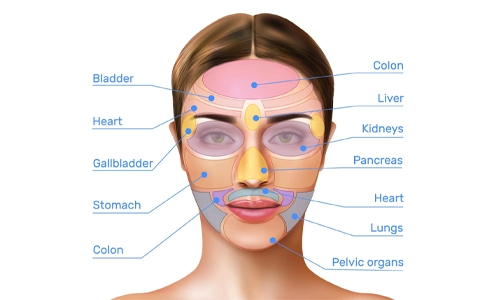
Face mapping is the practice of linking specific areas of the face to specific internal organs or body systems. The idea traces back roughly 3,000 years to Traditional Chinese Medicine and Ayurveda, both of which describe energy pathways connecting the skin's surface to organs such as the liver, kidneys, and lungs. According to this framework, a breakout on the nose signals a heart or circulation issue, while a breakout on the chin points to a hormonal or reproductive concern.
The practice spread widely through skincare blogs and social media because it offers a simple, visual explanation for a frustrating problem. But simple is not the same as accurate.
Is Face Mapping Backed by Science?
Mostly, no. Clinical research has not established a direct link between a specific facial zone and a specific internal organ. Reviewing the evidence, dermatologists consistently note that there is no reliable data connecting, for example, forehead breakouts to digestive disease or under-eye puffiness to kidney dysfunction.
What is Real?
Different areas of the face genuinely behave differently, just not for the reasons traditional face mapping describes. The forehead, nose, and chin (often called the T-zone) carry a higher density of oil glands, so they clog more easily. The chin and jawline carry androgen-sensitive receptors, so hormonal shifts show up there first. The cheeks pick up more bacteria and friction from phones and pillowcases. These are measurable, physical differences, and they explain why breakouts cluster the way they do.
Acne is the most common skin condition in the United States, affecting close to 50 million people every year and roughly 85 percent of adolescents at some point. With numbers that large, spotting a real pattern in your own skin is genuinely useful. The mistake is treating that pattern as a diagnosis instead of a clue.
Face Mapping Chart: Tradition vs. Modern Dermatology
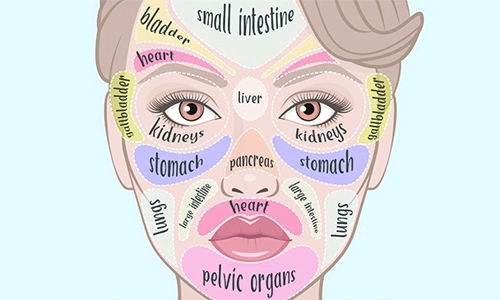
The table below compares what traditional face mapping claims about each zone with what current dermatology actually supports, plus a practical first step for each area.
| Face Zone | Traditional Face-Mapping Belief | What Modern Dermatology Says | Practical Next Step |
| Forehead | Linked to digestion and the nervous system | Oil-gland density is high here, and hairline products, sweat, and hats commonly clog pores | Switch to non-comedogenic hair products and cleanse after workouts |
| Nose | Tied to the heart and circulatory system | Nasal skin has the largest pores and oil glands on the face, so it is prone to blackheads and inflammation | Use a gentle salicylic acid cleanser and avoid over-scrubbing |
| Cheeks | Connected to the lungs and respiratory system | Cheeks pick up bacteria and friction from phones, pillowcases, and masks | Clean your phone screen and pillowcase weekly |
| Chin and Jawline | Associated with hormonal and reproductive health | Androgen-sensitive oil glands concentrate here, so breakouts often track the menstrual cycle | Track breakouts against your cycle and ask a doctor about hormonal options if they recur monthly |
| Under-Eye Area | Believed to reflect kidney function | Thin skin here shows fatigue, allergies, and fluid retention rather than organ disease | Prioritize sleep, manage allergies, and reduce sodium intake |
| Temples | Linked to the gallbladder in some traditions | Often reacts to hair products and sun exposure at the hairline | Rinse hair products fully and apply SPF to the hairline |
| Around the Mouth | Considered a digestive-system signal | Frequently perioral dermatitis triggered by fluoride toothpaste or heavy lip products | Try a fluoride-free toothpaste for four to six weeks to test the link |
A Closer Look at Each Facial Zone
Forehead Breakouts
Traditional face mapping ties the forehead to digestion and the nervous system. In practice, forehead acne is usually a hygiene and product issue. Hair oils, dry shampoo, sweatbands, and hats trap oil and bacteria along the hairline. Rinsing hair products out fully, choosing non-comedogenic formulas, and washing your face after sweating typically clears it within a few weeks.
Nose Breakouts
The nose carries the largest pores and oil glands on the face, which makes it especially prone to blackheads and inflamed bumps rather than a circulatory problem. A gentle salicylic acid cleanser, used two to three times a week, helps keep pores clear without over-stripping the skin barrier.
Cheek Breakouts
Cheeks sit in constant contact with phones, pillowcases, face masks, and hands, all of which transfer bacteria and oil. Wiping down your phone screen, changing your pillowcase weekly, and avoiding resting your chin or cheek on your hand during the day make a measurable difference.
Chin and Jawline Breakouts
This is the zone with the strongest scientific backing for a hormonal connection. Androgen-sensitive oil glands concentrate along the jawline, so breakouts here often flare before a period, during hormonal birth control changes, or with conditions such as PCOS. If jawline acne is cyclical, painful, or cystic, it is worth discussing hormonal treatment options with a doctor rather than treating it as a topical problem alone.
Under-Eye Area
Traditional charts link this zone to kidney function. In most healthy adults, under-eye puffiness and dark circles instead reflect poor sleep, seasonal allergies, dehydration, or high sodium intake. Prioritizing sleep and managing allergies resolves most cases. Sudden or severe swelling still deserves a medical check, since it can occasionally signal a fluid-retention issue.
Around the Mouth
Small bumps around the mouth and chin corners are often perioral dermatitis rather than true acne, commonly triggered by fluoride toothpaste, heavy lip balms, or steroid creams used elsewhere on the face. Switching to a fluoride-free toothpaste for four to six weeks is a low-risk way to test this trigger.
How to Use Face Mapping the Right Way
Face mapping is most useful as a pattern-tracking habit, not a diagnostic tool. Here is how to apply it without over-interpreting a single breakout:
- Photograph breakouts weekly to track whether they repeat in the same zone.
- Note timing against your menstrual cycle, stress levels, and any new products.
- Change one variable at a time, such as a pillowcase, toothpaste, or hair product, and wait four to six weeks before judging the result.
- Treat a repeating pattern as a clue to investigate, not a confirmed diagnosis.
- Bring your tracked pattern to a dermatologist instead of self-treating an internal condition based on a face map.
When to See a Dermatologist
Most breakouts respond to consistent skin care within eight to twelve weeks. See a board-certified dermatologist if:
- Acne is painful, cystic, or leaving scars
- Breakouts have not improved after two to three months of consistent treatment
- Jawline acne appears alongside irregular periods, unusual hair growth, or scalp thinning
- A rash around the mouth or eyes spreads or does not respond to stopping suspected triggers
- You notice sudden, unexplained changes in your skin along with other new symptoms
Note: This article is for general information and does not replace a diagnosis from a qualified healthcare provider. If you are concerned about a skin change or a possible underlying condition, schedule an appointment with a board-certified dermatologist.
Frequently Asked Questions About Face Mapping
Is face mapping scientifically proven?
No. There is no clinical evidence that specific facial zones map to specific internal organs. Dermatologists do agree that different zones have different oil-gland density, hormone sensitivity, and exposure to friction and bacteria, which explains why breakouts cluster in patterns.
What does forehead acne really mean?
Forehead acne usually points to clogged pores from hair products, sweat, or hats rather than a digestive problem. Switching to non-comedogenic products and washing your hairline after sweating often clears it up.
Does chin acne always mean a hormonal imbalance?
Not always, but chin and jawline breakouts are the pattern most strongly linked to hormones. If they flare around your period, worsen with stress, or come with irregular cycles, ask a doctor about hormonal causes such as PCOS.
Can stress cause breakouts in a specific area?
Stress raises cortisol, which increases oil production and can worsen acne anywhere on the face, but it does not target one zone the way traditional face mapping charts suggest.
What is the difference between face mapping and acne pattern tracking?
Face mapping assigns each zone to a specific internal organ based on tradition. Acne pattern tracking, the approach dermatologists use, looks at hormones, hygiene, products, and habits that are known to affect each area.
When should I see a dermatologist about breakouts?
See a dermatologist if acne is painful, cystic, or scarring, if it has not improved after eight to twelve weeks of consistent over-the-counter treatment, or if it comes with irregular periods, unusual hair growth, or unexplained weight changes.
Can diet affect where acne appears on the face?
Diet does not target a specific zone, but high-glycemic foods and dairy are linked to more frequent or severe breakouts overall in some people. An elimination trial of four to six weeks can help you spot a personal trigger.
Is under-eye puffiness a sign of kidney problems?
In most healthy adults, under-eye puffiness reflects fatigue, allergies, sodium intake, or fluid retention rather than kidney disease. Sudden, severe, or persistent swelling still warrants a medical check.
Face mapping got one thing right: where you break out is rarely random. It got the explanation wrong. Your forehead, nose, cheeks, chin, and jawline behave differently because of oil-gland density, hormone sensitivity, and daily habits, not because each zone is wired to a specific organ. Track your patterns, adjust the habits within your control, and bring a dermatologist into the conversation when a breakout pattern persists or comes with other symptoms.