
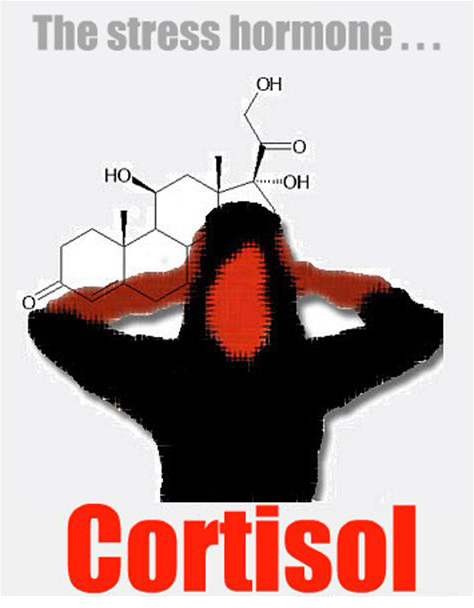
For those who don’t know what cortisol is, it is an important hormone in the body, secreted by the adrenal glands and involved in the proper functioning and regulation of blood pressure, glucose metabolism, immune function, insulin release and much more. We thus need to realize the importance of this hormone and see that there is a balance in the secretion of this hormone.
If you know what triggers your stress, you will be able to manage it wisely.
Cortisol Myths Debunked

Myth 1# Cortisol Cannot be Fixed as Stress is Unavoidable
Sure stress is unavoidable but simple things like exercising, eating your meals on time and eating right will keep you on track and keep your cortisol rhythm in proper sync and flow.
Myth 2# High Hormone Causes Weight Gain
High levels can cause weight gain but so can low cortisol or the same made at the wrong times. Simple steps like getting ½ hour of sunlight within an hour of waking can help if it is too high or too low.

Myth 3# Exercise Lowers the Hormone Levels

Exercise is a type of stress. It serves us best when it is challenging but not overwhelming. To understand whether it is good or bad you need to see how stable your adrenals are now and how much exercise you are already used to. Do not indulge in activities that overwhelm your body and make it think of exercise as a factor of stress.
Myth 4# Carbs are Bad for Cortisol
Your body uses this hormone to rescue you from low blood sugar. This makes carbs a tool you can use to help regulate your cortisol. Start your day with 25-35 grams of protein and finish it with 20-50 grams of high-quality carbs. You need it at both times of the day to help regulate all your hormones.
Myth 5# Cortisol is Not Important
Regulating or maintaining its levels in the body is essential to keep your energy high, your sleep good, and your metabolism strong.
Cortisol FAQ
Do doctors believe in cortisol?
Yes, doctors absolutely recognize cortisol as a crucial hormone. It's extensively studied, measured in medical tests, and its dysfunction causes well-documented conditions.
Why does cortisol spike at 3am?
Cortisol naturally rises in early morning hours (2-4am) as part of circadian rhythm, preparing your body to wake up and handle daily stressors.
What is the truth about cortisol?
Cortisol is essential for survival, regulating metabolism, immune response, and stress. It's problematic only when chronically elevated or deficient, not inherently "bad."
What are the symptoms of too much cortisol in the body?
Symptoms include weight gain, high blood pressure, mood swings, fatigue, purple stretch marks, easy bruising, slow wound healing, and increased infections.
How do cortisol detox?
You can't "detox" cortisol as it's essential. Instead, manage stress through exercise, adequate sleep, meditation, balanced diet, and reducing chronic stressors.
How to track your cortisol levels?
Cortisol levels are measured through blood tests, saliva tests, or 24-hour urine tests. Consult your doctor for proper testing and interpretation.
How to turn off cortisol?
You can't completely "turn off" cortisol as it's vital for life. You can lower excessive levels through stress management, sleep, and lifestyle changes.
What is cortisol steal?
Cortisol steal theory suggests chronic stress diverts resources from other hormone production to prioritize cortisol, though this concept lacks strong scientific evidence.
Why cortisol is called life saving hormone?
Cortisol helps survive emergencies by increasing blood sugar, suppressing inflammation, and mobilizing energy reserves during stress or life-threatening situations.
Can we survive without cortisol?
No, cortisol is essential for life. People with Addison's disease (cortisol deficiency) require hormone replacement therapy to survive and function normally.
Why is cortisol essential for life?
Cortisol regulates blood pressure, blood sugar, inflammation, metabolism, and stress response. Without it, the body cannot maintain vital functions properly.
What is the best treatment for high cortisol levels in females?
Treatment depends on the cause: medication to block cortisol production, surgery for tumors, stress management, lifestyle changes, and hormone therapy.
How is cortisol secreted?
The hypothalamus releases CRH, triggering pituitary to release ACTH, which signals adrenal glands to produce and release cortisol into bloodstream.