
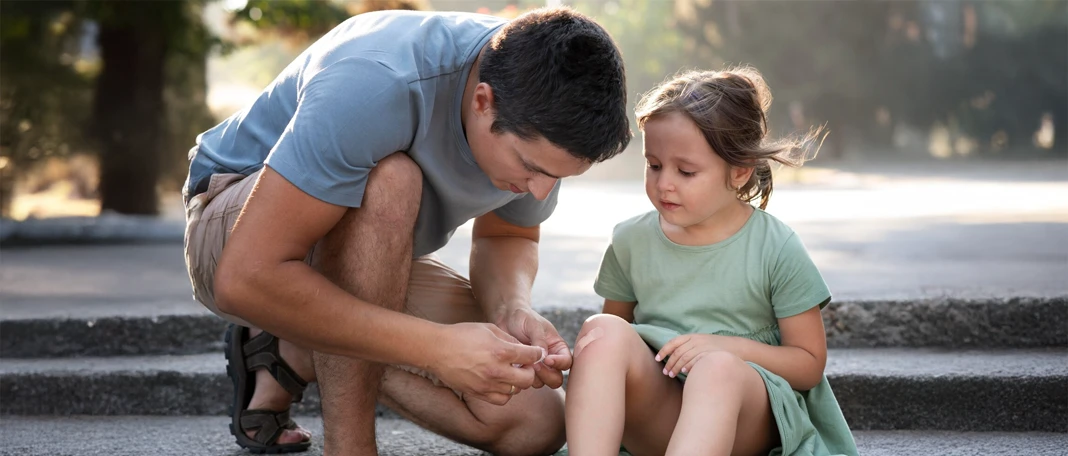
Children are endlessly curious, energetic, and often fearless. As much as we try to protect them, accidents still happen. By understanding the “most common childhood injuries,” you can respond smartly, act confidently, and reduce the harm. In this revamped guide, we cover six frequent accident types, how to deal with them, and how to prevent recurrence.
1. Falls & Head Injuries
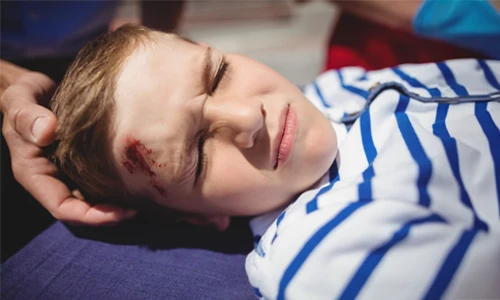
What Happens: Kids slip, trip, climb, and tumble—often onto hard surfaces. Even a short fall can lead to bruises, bumps, or in serious cases, head injury or concussion.
How to Deal
- Check for consciousness, bleeding, vomiting, or confusion
- If they lose consciousness, act as though it’s serious — call emergency services
- For mild bumps, apply a cold compress, keep them quiet and monitor for 24 hours
- If symptoms worsen (dizziness, blurred vision, nausea), seek medical care
Prevention Tips
Use railings, non-slip socks or mats, supervise climbing, install gates, soft surfaces in play areas.
2. Cuts, Scrapes & Lacerations
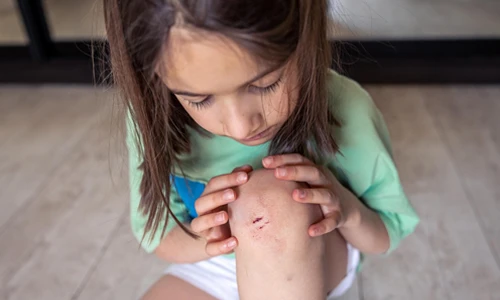
What Happens: Sharp edges, falls, toys, doors—these can cause small to deeper cuts or scrapes.
How to Deal
- Clean the wound gently with clean water
- Apply an antiseptic and bandage
- If bleeding doesn’t stop in ~10 minutes, or wound is deep, seek medical care
- Watch for signs of infection (redness, swelling, pus)
Prevention Tips
Keep floors clear of clutter, choose toys without sharp edges, teach kids not to run with objects.
3. Burns & Scalds
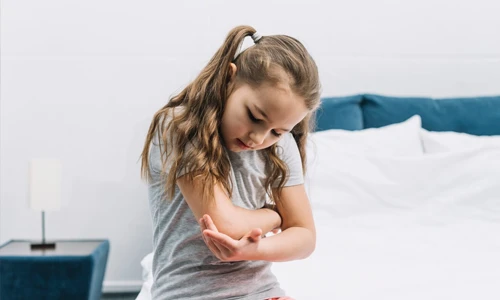
What Happens: Contact with hot surfaces, boiling liquids, sun, or chemicals can cause first-, second-, or third-degree burns.
How to Deal
- Immediately cool with cool (not ice-cold) water for 10–20 minutes
- Cover with a sterile, non-stick dressing
- For deep burns, blisters, or burns on face/hands/genitals, seek urgent medical attention
Prevention Tips
Supervise cooking, keep hot liquids away from edges, use sunscreen, set water heater to safe temperature.
4. Choking & Airway Blockages

What Happens: Kids may swallow small objects, choke on food, or inhale items accidentally.
How to Deal
- For infants: use back blows and chest thrusts
- For older children: abdominal thrusts (Heimlich maneuver)
- If breathing stops, begin CPR and call emergency services
Prevention Tips
Avoid giving small hard foods (nuts, popcorn) to toddlers, cut food into small pieces, ensure toys are age-appropriate, teach children to chew thoroughly.
5. Poisoning & Ingested Substances
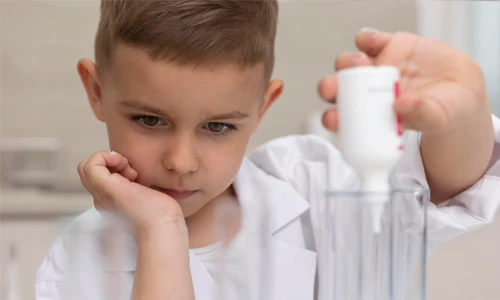
What Happens: Kids may ingest household chemicals, medications, plants, or cleaning agents.
How to Deal
- Identify the substance, call Poison Control immediately
- Do not induce vomiting unless advised
- If the child is unconscious, don’t give anything by mouth — call emergency services
Prevention Tips
Store medicines and chemicals in locked cabinets, use childproof caps, keep products in original containers, and supervise play with plants.
6. Fractures, Sprains & Strains

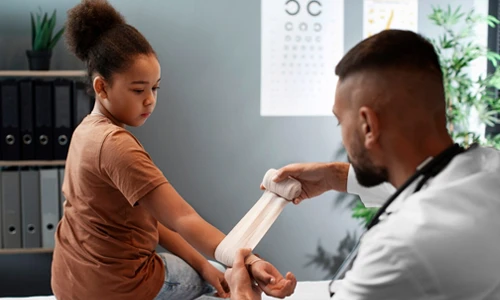
What Happens: Falling, twisting, or sudden impact can injure bones or joints—arms, wrists, legs, ankles, and shoulders are common sites.
How to Deal
- Immobilize the area (splint or sling)
- Apply ice wrapped in a cloth
- Keep the child comfortable and get a medical evaluation (X-ray)
- For severe deformity, inability to move, or open fractures, seek urgent care
Prevention Tips
Ensure children wear helmets and protective gear during sports or biking, supervise climbing, and maintain safe play areas.
FAQs
Q: What are the most common childhood injuries?
Falls, cuts/lacerations, burns, choking, poisoning, fractures/sprains are among the most frequent injuries in children.
Q: How do you treat minor cuts in kids?
Clean with water, apply an antiseptic, and cover with a sterile bandage. Monitor for signs of infection.
Q: When should I take my child to emergency care after a fall?
If there’s unconsciousness, vomiting, confusion, deformity, persistent pain, or inability to move, seek emergency help.
Q: Can home remedies treat burns in children?
Cool with lukewarm water, cover, and monitor. For deep, large, or facial burns, always seek medical care.
Q: How do you prevent choking accidents in toddlers?
Cut food into small pieces, supervise eating, avoid small toys, and teach chewing well.
Q: What should I do if a child swallows poison?
Call Poison Control immediately with the substance name. Don’t induce vomiting unless instructed.
Q: Are broken bones common in kids?
Yes, thanks to their active lifestyles. Growing bones are more prone to fractures, especially in arms and wrists.
Q: How can parents reduce fracture risk?
Ensure safe play areas, enforce helmet use, supervise climbing, and maintain bone-healthy diets (calcium, vitamin D).
Accidents in childhood are almost inevitable, but damage from them doesn’t have to define outcomes. Knowing how to manage the “most common childhood injuries” empowers you to act decisively, reduce complications, and reassure your child. It’s not about being perfect—but being prepared. Slip, stumble, or scrape, you’ll be ready.