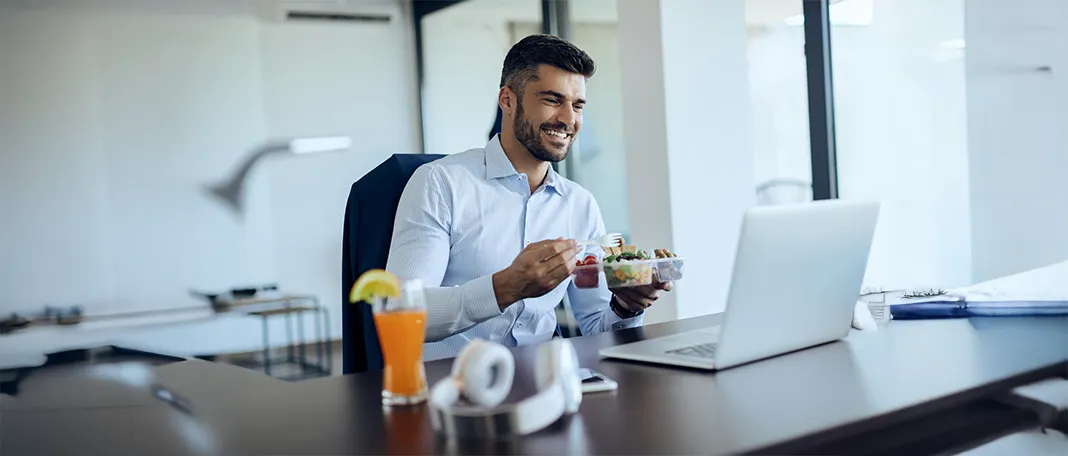
Eating at your desk feels efficient. No time lost. No meetings missed. Emails answered between bites.
But the body does not experience it as efficiency.
Food is not just fuel.
It is a process that involves digestion, hormones, nerves, posture, and attention.
When meals are squeezed into work mode, the body quietly pays the price.
Here are the real reasons why you shouldn't eat at your desk, not from a productivity blog, but from how the body actually works.
1. Your Digestion Works Best When Your Mind Is Not Working

Digestion is not automatic. It needs a calm nervous system.
When you eat while answering emails or sitting in a tense posture, your body stays in “task mode.” Blood flow is directed to the brain, not the gut.
What this leads to:
- Bloating and heaviness after meals
- Acid reflux or burning
- Feeling tired instead of nourished
The stomach releases digestive enzymes more effectively when you eat without mental pressure. Even 15 minutes away from your screen can change how your food feels afterward.
2. Desk Eating Encourages Mindless Overeating

When attention is split, the brain misses fullness signals.
You may finish lunch and still feel unsatisfied, not because the food was insufficient, but because your body never registered the meal properly.
Over time, this can lead to:
- Eating more snacks later in the day
- Cravings despite regular meals
- Weight gain without obvious overeating
This is one of the most overlooked reasons why you shouldn't eat at your desk. Awareness during meals directly affects appetite control.
3. Productivity Drops Instead of Improving

Eating at your desk feels productive, but the opposite often happens.
After a distracted meal:
- Energy dips faster
- Focus feels scattered
- Afternoon fatigue sets in earlier
A proper break allows the brain to reset and recharge. Stepping away from work while eating can improve post-meal concentration and reduce burnout.
Your brain works better when it knows it is allowed to rest.
4. Stress and Emotional Eating Become Linked

When food is always paired with deadlines and screens, the body associates eating with stress.
This pattern can quietly turn into:
- Eating to cope with pressure
- Loss of enjoyment around food
- Guilt or rushed meals
Psychologically, meals act as anchors in the day. Removing that pause removes emotional regulation that naturally happens during calm eating.
5. Posture and Muscle Tension Affect Digestion

Desk posture is rarely digestion-friendly.
Hunched shoulders, compressed abdomen, and shallow breathing restrict stomach movement. This slows digestion and increases discomfort.
Eating in a relaxed, upright position helps:
- Improve gut motility
- Reduce gas and cramps
- Support better breathing while eating
The body was not designed to digest while leaning into a laptop.
6. Work-Life Boundaries Slowly Erode
One meal at the desk turns into every meal at the desk.
Lunch becomes emails.
Snacks become scrolling.
Breaks disappear.
Over time, this affects mental health, not just digestion. Creating a physical separation between work and food helps the nervous system recognize balance.
This is a long-term reason why you shouldn't eat at your desk if you want sustainable work habits.
FAQs
Is it unhealthy to eat at your desk every day?
Yes. Daily desk eating can affect digestion, stress levels, posture, and appetite regulation over time.
Does eating at your desk reduce productivity?
Often, yes. Skipping proper breaks leads to faster fatigue and reduced focus later in the day.
Can desk eating cause digestive problems?
It can contribute to bloating, acid reflux, and poor digestion due to stress and posture.
Is eating at your desk okay occasionally?
Occasional desk meals are fine. Problems arise when it becomes a daily habit without mindful breaks.
Does screen time during meals affect digestion?
Yes. Screens keep the nervous system active, which interferes with digestive efficiency.
What is the healthiest way to take a lunch break at work?
Step away from your workspace, eat without screens, and allow your body time to rest and digest.
What to Do Instead (Without Losing Time)
You don’t need a long lunch break to support your health.
Try this:
- Step away from your desk for even 10–15 minutes
- Eat without screens
- Sit upright and chew slowly
- Treat meals as pauses, not interruptions
Small changes repeated daily create noticeable shifts in energy, digestion, and focus.