

Imagine starting your day as a car running on empty—how far can you really go without fueling up? The importance of breakfast lies in its ability to provide the energy and nutrients your body and mind need to perform at their best. Breakfast has earned its reputation as the day’s jumpstart, but is it really the secret sauce to energy and focus, or just a morning myth? Whether you're team pancakes or team "skip and sip coffee," this guide is here to uncover the truth about the importance of breakfast and help you decide if it truly deserves its title as the most important meal of the day.
What Defines a Healthy Breakfast?

A healthy breakfast is more than just filling your stomach in the morning—it’s about nourishing your body and setting the tone for your day. The ideal breakfast provides a balance of nutrients that fuel your energy levels, support brain function, and keep you satisfied until your next meal. A mix of complex carbohydrates, lean protein, healthy fats, and fiber is the winning formula. Think whole-grain toast topped with avocado, and a boiled egg, or a bowl of oatmeal sprinkled with nuts and fresh berries.
It’s also important to stay hydrated after a long night’s rest. Starting your day with a glass of water, herbal tea, or a small glass of fresh juice can help rehydrate and energize you. And don’t worry—healthy breakfasts don’t need to be complicated. Simple choices like a banana with peanut butter, or Greek yogurt with honey and granola can do the trick. The key is balance, not perfection, so focus on incorporating whole, minimally processed foods that make you feel your best.
The History Behind the Claim

The idea of breakfast as the most important meal gained popularity in the early 20th century. Marketing campaigns by cereal companies like Kellogg’s played a significant role in promoting breakfast as a critical meal. Historically, breakfast has been about nourishment—farmers needed a hearty meal to power through labor-intensive days, and children were encouraged to eat well before school.
Today, the significance of breakfast varies across cultures and lifestyles. For example, many Asian cultures traditionally enjoy savory breakfast items, while Western diets lean toward cereals, eggs, and toast.
Some of the Importance of Breakfast

For many, breakfast is crucial because it replenishes energy stores after a night of fasting. Here’s why it matters:
- Boosts Energy Levels - A balanced breakfast provides the glucose needed to kickstart your metabolism and energize your body.
- Improves Focus and Memory - Studies have shown that eating breakfast can enhance cognitive performance, particularly in children and teens.
- Reduces Cravings - A morning meal can help regulate blood sugar levels, reducing unhealthy snacking later in the day.
What Happens If You Skip Breakfast?

Skipping breakfast can have varying effects depending on your lifestyle, health, and daily routine. While some people function just fine without it, others may experience noticeable drawbacks.
Energy Slump
Your body relies on glucose from food to fuel your activities. Without breakfast, you might feel sluggish or fatigued, especially mid-morning.
Concentration and Productivity

Studies suggest that skipping breakfast can affect your focus and cognitive performance. This is particularly true for children and students who rely on breakfast to stay attentive in school.
Impact on Metabolism

While some argue that skipping breakfast helps with intermittent fasting, for others, it might slow their metabolism, making them feel hungrier later in the day, and potentially leading to overeating.
Mood Swings

Hunger can make you irritable or less patient, leading to the infamous “hangry” feeling.
Missed Nutrients

Breakfast is an opportunity to consume essential nutrients like fiber, vitamins, and minerals. Skipping it means missing out on this dietary boost.
What Should a Healthy Breakfast Look Like?
A healthy breakfast is about balance, not just eating anything to fill the void.
- Protein Power - Foods like eggs, Greek yogurt, or nut butter provide long-lasting energy and help keep you full.
- Complex Carbohydrates - Whole-grain bread, oatmeal, or quinoa give your body the sustained energy it needs to power through the morning.
- Healthy Fats - Avocados, nuts, or seeds are excellent for brain function and overall health.
- Fiber Boost - Add fruits, vegetables, or chia seeds to aid digestion and keep you feeling full.
- Hydration - Don’t forget fluids! A glass of water, herbal tea, or even a smoothie can help replenish what you lose overnight.
Pro Tip
A quick example of a balanced breakfast could be avocado toast topped with a poached egg, and a side of fresh fruit. If you’re in a rush, a smoothie made with spinach, banana, almond butter, and oats can do the trick.
Does Breakfast Suit Everyone?
The idea that “breakfast is a must” doesn’t apply to everyone.
- Different Lifestyles - Some people thrive on intermittent fasting, skipping breakfast to align with their eating windows. For others, breakfast is essential to their day.
- Digestive Comfort - If you wake up feeling nauseous or have a sensitive stomach in the morning, a delayed or lighter breakfast might be more suitable.
- Cultural and Personal Preferences - Breakfast traditions vary globally. While some enjoy a hearty meal, others might prefer a small snack or drink to start their day.
- Activity Levels - If you’re highly active in the morning, breakfast becomes more crucial to fuel your workouts or tasks. Less active individuals may not feel as reliant on an early meal.
- Health Conditions - People with certain medical conditions, like diabetes, often benefit from having breakfast to regulate blood sugar levels.
Key Takeaway
The best breakfast routine is one that suits your body, lifestyle, and preferences. Listen to what your body needs and adjust accordingly.
Quick and Healthy Breakfast Ideas for Busy Mornings
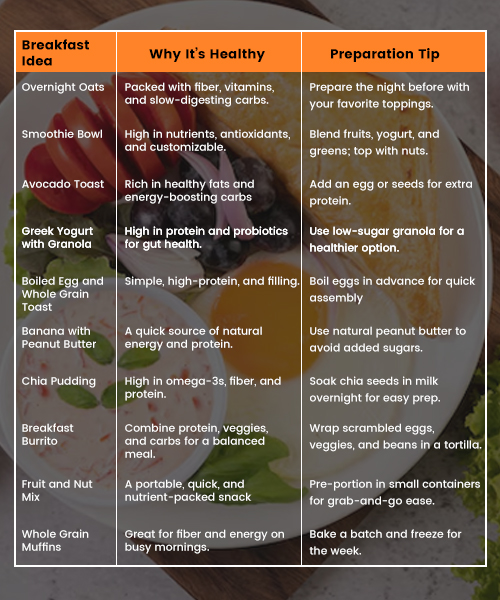
What Are Healthy Breakfast Swaps?

Sometimes, making simple swaps in your breakfast can significantly improve its nutritional value without sacrificing taste.
1. White Bread to Whole-Grain Bread
Why? Whole-grain bread is richer in fiber and nutrients, helping you feel full longer and supporting digestive health.
Swap It - Choose 100% whole-grain or sprouted bread for your toast or sandwich base.
2. Sugary Cereals to Oatmeal with Fresh Fruit
Why? Sugary cereals can cause energy spikes and crashes, while oatmeal provides sustained energy and fiber.
Swap It - Add fresh berries, nuts, or a drizzle of honey for natural sweetness.
3. Flavored Yogurt to Plain Greek Yogurt
Why? Flavored yogurts often have added sugars, whereas plain Greek yogurt is higher in protein and lower in sugar.
Swap It - Sweeten with a handful of fresh fruit or a sprinkle of cinnamon.
4. Processed Juice to Fresh Fruit or Smoothies
Why? Processed juices lack fiber and are often loaded with added sugars. Whole fruits retain fiber and nutrients.
Swap It - Blend a smoothie with whole fruits, spinach, and unsweetened almond milk for a nutrient-packed drink.
5. Butter or Cream Cheese to Avocado Spread
Why? Avocado is packed with healthy fats and essential nutrients compared to the saturated fats in butter or cream cheese.
Swap It - Mash avocado with a sprinkle of salt and lime juice for a creamy, flavorful spread.
6. Regular Pancakes to Whole-Grain or Protein Pancakes
Why? Whole-grain pancakes or ones made with protein-rich ingredients like almond flour help balance blood sugar levels.
Swap It - Top with a dollop of Greek yogurt and fresh fruit instead of syrup.
7. Processed Breakfast Bars to Homemade Energy Bites
Why? Many store-bought bars contain added sugars and preservatives, whereas homemade options are wholesome and customizable.
Swap It - Make energy bites with oats, nut butter, and a touch of honey.
8. Fried Eggs to Poached or Boiled Eggs
Why? Poached or boiled eggs are lower in fat compared to fried eggs cooked in oil or butter.
Swap It - Pair with whole-grain toast and a side of greens for a balanced meal.
These small adjustments can make your breakfast more nutrient-dense, satisfying, and better aligned with your health goals.
Frequently Asked Questions
Is breakfast truly the most important meal of the day, or is that a myth?
The traditional saying that breakfast is the "most important meal" is subject to debate. While regular breakfast consumption is strongly associated with better health markers (like reduced risk of heart disease and diabetes) and overall healthier lifestyles, some modern research—especially considering practices like intermittent fasting—suggests that for a healthy adult who isn't hungry first thing in the morning, the timing of the first meal is less critical than the overall nutritional quality of their diet throughout the day.
Why is breakfast often called the "most important meal"?
The term "breakfast" literally means "breaking the fast" that occurs overnight. It's considered vital because it replenishes your body's glucose stores, which are essential for brain and muscle function after up to 12 hours without food. It was historically promoted as a necessary way to "kick-start" metabolism and ensure adequate daily nutrient intake.
If it's not breakfast, what could be the most important meal?
Some nutritional and sociological perspectives argue that the "most important" meal is the one the family shares together. Family meals, regardless of the time of day, are crucial for fostering communication, teaching healthy eating habits, and ensuring children's long-term developmental and social health.
What are the key benefits of eating a healthy breakfast?
A balanced breakfast offers several proven benefits: Energy & Focus: It provides glucose to fuel your brain, improving concentration, memory, and mood. Nutrient Intake: Breakfast eaters are more likely to meet their recommended daily intake for essential vitamins, minerals, and fiber. Weight Management: It helps control blood glucose levels and hunger, which can prevent overeating or snacking on high-fat, high-sugar foods later in the day.
What happens to your body when you skip breakfast?
Skipping breakfast can cause your blood sugar levels to remain low, leading to sluggishness, poor concentration, and irritability (often called "brain fog"). You may also experience intense hunger later, which increases the likelihood of overindulging or choosing less nutritious, high-calorie foods at your next meal.
Does skipping breakfast help with weight loss?
Not reliably. While skipping breakfast cuts calories in the morning, studies show that people often compensate by eating more or making unhealthier food choices later, leading to no significant difference in total daily calorie intake or long-term weight loss compared to breakfast eaters.
I don't feel hungry in the morning. Should I still force myself to eat?
It is not necessary to force yourself to eat if you are not hungry. Listen to your body's hunger cues. If you skip breakfast, simply ensure your first meal of the day is nutritionally complete and that you are meeting your daily requirements for vitamins, minerals, and protein through your other meals.
Breakfast can be a powerful way to set the tone for your day—providing energy, focus, and essential nutrients to keep you going. Whether you’re a fan of hearty meals or prefer something light and quick, the key is making mindful choices that nourish your body and mind. Remember, skipping breakfast isn’t for everyone, and what works best for you might not be the same for someone else. The most important thing is to listen to your body and give it what it needs to thrive. A balanced breakfast isn’t just a meal; it’s an investment in your well-being.