

Shaving: some see it as a chore, others as a ritual. Whether you’re aiming for a clean-cut look or just keeping things tidy, getting it right can mean the difference between smooth, irritation-free skin and a face that feels like it lost a battle. If you’re tired of razor burns, bumps, and uneven results, you’re in the right place. Let’s break it down into simple, effective steps to a perfect shave.
Step 1: Preparation – The Key to a Close, Comfortable Shave
A great shave starts before the razor even touches your skin. Jumping straight into shaving without proper prep is a one-way ticket to razor burn and irritation.
Here’s How to Do It Right
- Start with warm water – A warm shower or a damp, hot towel softens hair and opens pores.
- Exfoliate gently – Use a face scrub or wash to remove dead skin cells and prevent ingrown hairs.
- Apply pre-shave oil (optional) – This adds an extra layer of protection and smoothness, especially for sensitive skin.
Skipping prep is like trying to paint without priming the wall—it might work, but the results won’t be nearly as good.
Step 2: The Right Razor – Finding Your Perfect Match
Not all razors are created equal. The right one depends on your skin type, hair thickness, and personal preference.
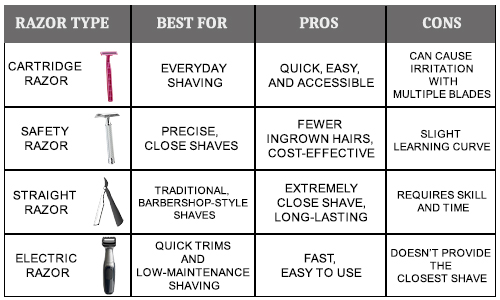
Whichever you choose, keep the blade sharp. A dull razor is a surefire way to end up with redness and nicks.
Step 3: Lather Up – The Right Way
A proper lather acts as a cushion between your skin and the blade, helping the razor glide smoothly. Dry shaving? Big mistake.
What to Use?
- Shaving cream or gel – Go for something hydrating, not the cheap, drying foams.
- Shaving soap – Works well if you use a brush, offering a rich, smooth lather.
- Brush vs. Hands? A brush lifts hairs and spreads the cream more evenly, but using your hands works fine too.
A good lather makes all the difference, so take your time—your skin will thank you.
Step 4: The Shave – Technique Matters
Most people make the mistake of rushing through their shave. A perfect shave is all about technique, not speed.
Follow these golden rules:
- Shave with the grain first (in the direction your hair grows).
- Use light, short strokes—don’t drag the razor like you’re mowing a lawn.
- Rinse the blade frequently—a clogged razor won’t cut properly.
- Want a closer shave? Do a second pass across the grain, but avoid going against the grain unless you have experience.
Pressing harder won’t give you a closer shave—it’ll just irritate your skin. Let the blade do the work.
Step 5: Post-Shave Care – Lock in the Smoothness
Your skin just went through some serious action, and now it’s time to calm it down.
What to Do After Shaving:
- Rinse with cold water – This helps close the pores and reduce irritation.
- Apply an alcohol-free aftershave – Avoid anything that stings; look for soothing ingredients like aloe vera.
- Moisturize – Shaving removes a layer of skin, so hydration is key.
Neglecting post-shave care is like working out and skipping the cool-down—you’ll feel it later.
Common Shaving Mistakes (And How to Fix Them)
- Using a dull blade – Swap it out regularly to avoid unnecessary tugging.
- Skipping the prep – Always soften the skin before shaving.
- Pressing too hard – Light strokes prevent razor burn.
- Going against the grain too soon – Stick with the grain for the first pass.
- Not cleaning your razor – Rinse it thoroughly to prevent bacteria buildup.
How Often Should You Shave? Finding Your Ideal Routine
Shaving every day isn’t for everyone, and finding the right frequency depends on your skin type, hair growth, and personal preference.
- Daily Shaving – Best for those who prefer a clean, smooth face at all times. However, it can lead to irritation if not done properly.
- Every Other Day – A balanced approach that allows the skin to recover while keeping a neat look.
- Twice a Week – Great for those with sensitive skin who experience irritation from frequent shaving.
- Occasional Shaving – If you prefer stubble or a short beard, trimming with a clipper might be the better option.
Tip
If your skin feels irritated after shaving too frequently, give it a break and adjust your routine.
How to Shave Sensitive Skin Without Irritation?
If your skin turns red and irritated every time you shave, it’s time to adjust your technique and products.
- Use a pre-shave oil to add an extra layer of protection.
- Stick to single-blade razors or safety razors to reduce irritation.
- Always use a quality shaving cream—cheap foam dries out the skin.
- Finish with an unscented, alcohol-free moisturizer to soothe the skin.
- Try shaving at night—this gives your skin time to recover while you sleep.
Sensitive skin requires extra care, but with the right approach, you can still achieve a smooth, irritation-free shave.
Shaving vs. Trimming: Which One Is Right for You?
Not everyone wants a completely clean shave—some prefer maintaining stubble or a short beard. Here’s how shaving compares to trimming:
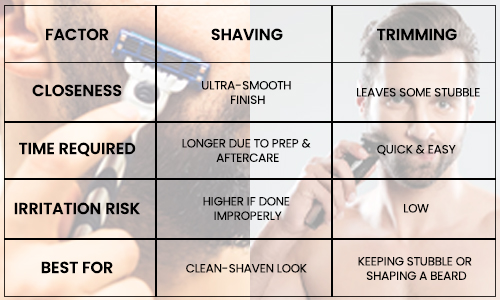
If you struggle with razor burn or ingrown hairs, trimming might be a better option for your skin type.
How to Maintain Your Razor for a Longer Lifespan?
Taking care of your razor isn’t just about hygiene—it also helps extend the life of your blades and ensures a better shave.
- Rinse thoroughly after every use to remove hair and shaving cream buildup.
- Dry the blade completely—moisture can cause rust and dull the edges.
- Store in a dry place (not in the shower) to prevent bacteria growth.
- Use a blade cover if traveling to keep the edge sharp and clean.
- Change blades regularly—don’t wait until they start tugging at your skin.
A clean, sharp razor = a better, smoother shave every time.
At the end of the day, the perfect shave isn’t about speed—it’s about consistency and technique. Treat it as a ritual rather than a rushed task, and your skin will thank you with a smooth, clean finish every time.