
Imagine a night out with friends that takes a dangerous turn. A fun evening can quickly escalate into a life-threatening situation if someone consumes too much alcohol. Alcohol poisoning isn’t just about feeling sick; it’s a severe medical emergency that requires immediate attention. Unfortunately, many people underestimate the risks, believing that sleep or time will fix the problem. This guide is here to set the record straight, offering clear, evidence-based information on how to recognize its symptoms, and what actions to take to prevent and respond to this medical emergency.
What is Alcohol Poisoning?

Alcohol poisoning occurs when someone consumes a large amount of alcohol in a short period, overwhelming the body’s ability to process it. When you drink alcohol, it’s absorbed into the bloodstream through the stomach and small intestine. From there, it’s carried to the liver, where it’s metabolized. The liver can only metabolize about one standard drink per hour, and when this limit is exceeded, alcohol begins to accumulate in the bloodstream which causes your Blood Alcohol Concentration (BAC) to rise. This excess alcohol interferes with the brain’s ability to control vital functions like breathing, heart rate, temperature regulation, impaired judgment, and loss of coordination, and at extreme levels, it leads to potentially fatal consequences.
Alcohol Poisoning Statistics
Before jumping into the main topic, it's crucial to understand the significance of addressing alcohol poisoning. To provide a clear perspective, let's examine the most recent and accurate statistics on alcohol-related deaths in the United States over the past four years, as reported by the National Institute on Alcohol Abuse and Alcoholism (NIAAA).
Common Causes and Risk Factors
Apart from consuming a large amount of alcohol in a short time individual factors like age, gender, body weight, individuals with underlying health conditions, and alcohol tolerance also play a role in alcohol poisoning. For instance, younger people, those with a lower body weight, and women are at higher risk due to low alcohol tolerance levels. Additionally, mixing alcohol with other substances like medications can also increase the risk.
Early Warning Signs
It’s crucial to recognize the early signs to intervene before the situation becomes critical. These signs include confusion, vomiting, slow or irregular breathing, and pale or bluish skin. As alcohol poisoning progresses, the person may experience seizures, low body temperature, and unconsciousness.
Alcohol Poisoning Symptoms Next Day

Recognizing the signs of alcohol poisoning is crucial for taking timely action. Symptoms can vary depending on the individual and the amount of alcohol consumed, but common indicators include:
- The person may appear extremely disoriented or unresponsive.
- Frequent or uncontrolled vomiting can increase the risk of choking.
- It can trigger seizures due to its effects on the brain.
- Breathing rates of fewer than eight breaths per minute or gaps of more than 10 seconds between breaths are alarming signs.
- A drop in body temperature leads to bluish skin or paleness.
- The person may pass out and be unresponsive, even when stimulated.
When to Seek Medical Help?
Never assume that someone will "sleep it off" if they’ve consumed too much alcohol. Alcohol levels can continue to rise even after a person has stopped drinking, increasing the risk of severe complications. If you notice any of the critical symptoms mentioned above, call 911 or your local emergency number right away.
Medical Treatments

Once at the hospital, the person may undergo a series of treatments to stabilize their condition. This can include stomach pumping, IV fluids to prevent dehydration, and close monitoring of their vital signs. In severe cases, they may be admitted to the intensive care unit (ICU) for further treatment.
What to Do in an Emergency?

While waiting for help to arrive, here’s what you can do:
- Keep them awake and sitting up if possible. If they’re unconscious, position them on their side to prevent choking if they vomit.
- If their breathing becomes irregular, be ready to perform CPR if you’re trained. Basic CPR involves chest compressions to maintain blood flow to the brain and vital organs.
- Stay with the person and provide reassurance until medical help arrives.
What Not to Do?
Avoid giving them coffee or putting them in a cold shower—these methods do nothing to reverse alcohol poisoning and may even cause harm.
Long-Term Health Implications
While the immediate effects can be life-threatening, the long-term consequences are also serious. Repeated instances of alcohol poisoning can lead to:
- Long-term brain damage, including memory loss and cognitive impairments.
- Increased risk of liver disease, including cirrhosis and liver failure.
- A higher risk of developing alcohol dependence, anxiety, and depression.
It’s common for individuals to feel guilt, anxiety, or depression afterward. Seeking support from a counselor or support group can be an essential part of the recovery process. The sooner the person receives medical attention, the better their chances of avoiding long-term consequences.
What Happens If You Drink Rubbing Alcohol?
Rubbing alcohol, also known as isopropyl alcohol, is not meant for consumption and is highly toxic. If someone drinks rubbing alcohol, it can cause severe gastrointestinal distress, internal bleeding, and even central nervous system damage.
Symptoms of Isopropyl Alcohol Poisoning
- Confusion
- Vomiting
- Difficulty breathing
- Coma or death
Immediate medical attention is crucial, as the treatment differs from traditional alcohol poisoning. Activated charcoal may be used to absorb the toxin, and in severe cases, dialysis may be required to remove it from the bloodstream.
Prevention of Alcohol Poisoning
Preventing alcohol poisoning starts with responsible drinking. Here are some practical tips:
1. Safe Drinking Guidelines
Prevention starts with understanding your limits and sticking to them. The Centers for Disease Control and Prevention (CDC) recommends no more than one drink per day for women and two drinks per day for men. Pace yourself by drinking slowly, and consider alternating alcoholic beverages with water to stay hydrated.
2. Educational and Preventative Measures
Schools, communities, and families should emphasize the importance of responsible drinking. Additionally, when hosting social events, offer non-alcoholic options and encourage guests to look out for one another.
3. Supporting Others
If you’re out with friends, keep an eye on each other’s drinking. If someone is drinking too much too quickly, encourage them to slow down or take a break. Being a responsible friend can prevent a fun night from turning into a medical emergency.
Myths and Misconceptions
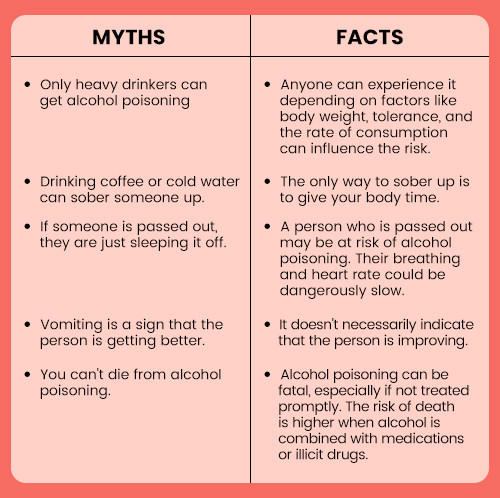
There are many myths about alcohol poisoning that can be dangerous if believed. Let’s debunk some of the most common:
Don't Let It Happen!
Alcohol poisoning is a serious condition that requires immediate attention. By understanding the risks, recognizing the symptoms, and knowing what actions to take, you can help prevent this dangerous situation and protect yourself and others. Share this guide to help spread awareness and encourage healthier choices.